
Fractional CIO vs Managed Service Provider — Understanding the Difference

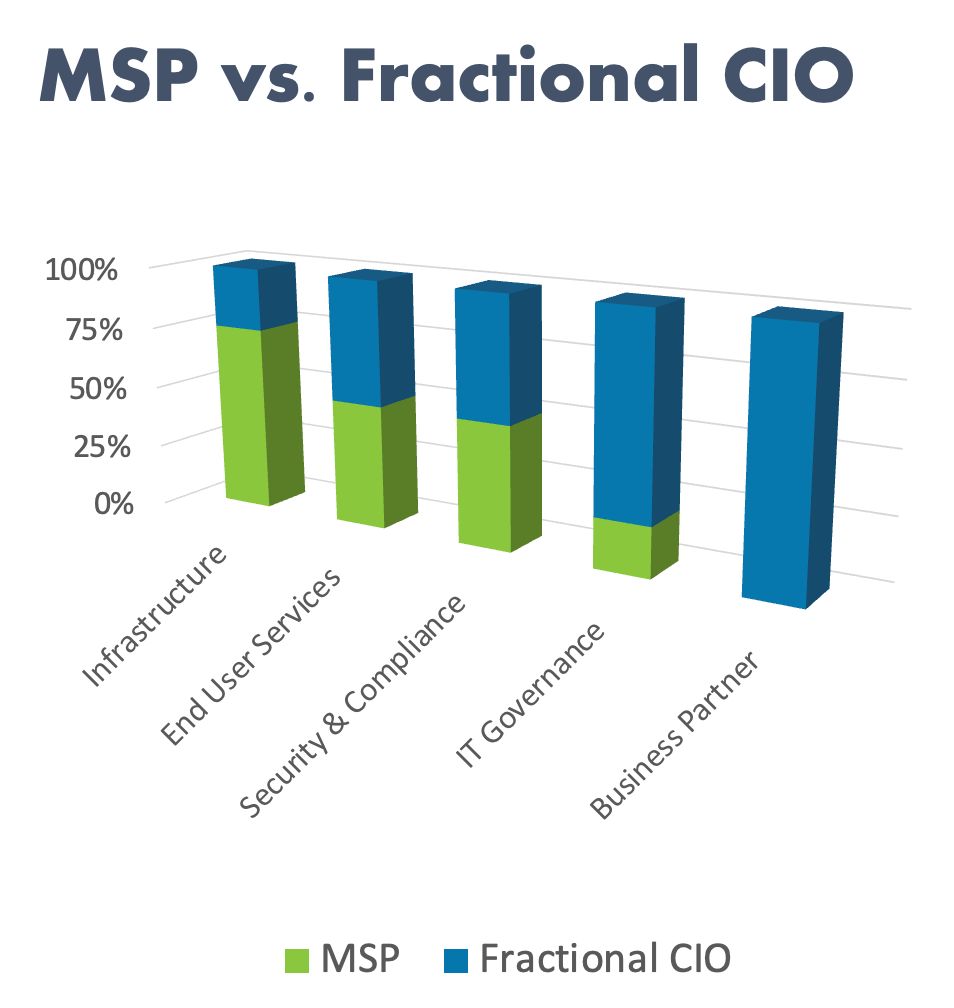
In my conversations with CEOs, CFOs, and other leadership team members outside of IT, I've realized many don't fully understand the difference between what a Managed Service Provider (MSP) does and what a Fractional CIO does — although they are usually too polite to say so.
The MSP delivers the base services for IT. The Fractional CIO provides the strategy and oversight. It's a symbiotic relationship.
What a Fractional CIO does
A Fractional CIO is proactive and accountable. They are part of the management team, acting as a leader, planner, and business partner. They:
- Focus on realizing ROI from technology investments.
- Align IT strategy with business strategy.
- Manage FTEs, contractors, and service providers.
- Conceptualize, design, and implement technology best practices.
What a MSP does
A Managed Service Provider delivers help desk services and plays the role of systems administrator and technical expert. They manage day-to-day operations hands-on and respond to new requests. MSPs:
- Deliver services efficiently within their areas of expertise.
- Lower technology costs through economies of scale.
- Provide highly specialized technology talent.
- Offer the ability to rapidly scale up and down.
Why independence matters
As a Fractional CIO, it is important to be independent from other IT service providers. That independence is what allows a Fractional CIO to be an unbiased strategic advisor — and to hold vendors accountable for delivering the highest quality service.